


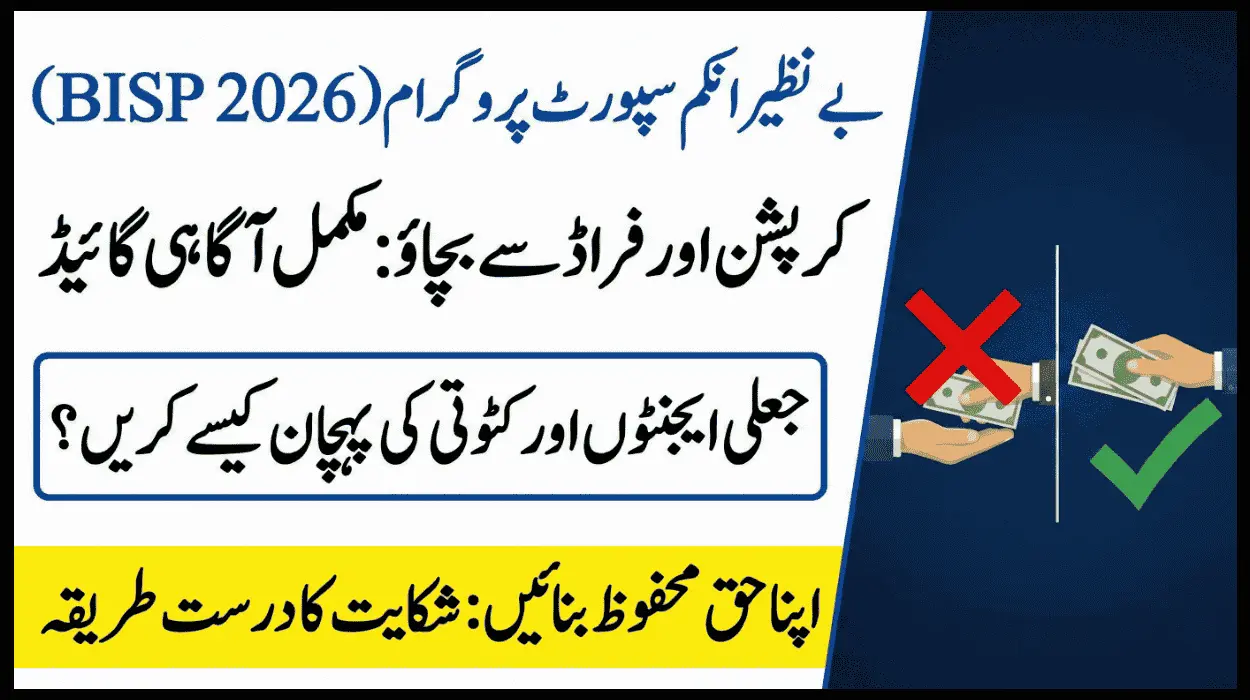
BISP Corruption Scandal 2026 What Fraud Looks Like Right Now
Introduction
When a welfare system works, it protects dignity and keeps vulnerable families standing during hard times. When fraud enters that system, it does more than steal money. It steals trust, delays payments, and forces deserving people to prove themselves again and again. The topic of the BISP corruption scandal 2026 brings attention to how welfare fraud can happen, what warning signs families should watch for, and which protections support a fairer process right now. This article explains the issue in a clear, practical way, with a focus on awareness, accountability, and safer access for low income households.
Why Welfare Fraud Hurts More Than Budgets
Welfare payments are not extra income for most families. They are survival support used for food, medicine, rent, school costs, and basic transport. When fraud in welfare programs increases, the damage spreads quickly. Families face delays. Systems tighten rules. Verification becomes stricter. Legitimate beneficiaries feel punished for a problem they did not create.
Fraud also creates a dangerous shadow economy around assistance. Middlemen appear, promising faster approval or larger payments. Unscrupulous agents may demand fees, take a cut, or collect personal data. This turns relief into a marketplace, which is the opposite of what social protection is supposed to be.
What the BISP Corruption Scandal 2026 Represents
A corruption scandal in a welfare system is usually not one single act. It often represents multiple weak points that bad actors exploit at the same time. The phrase BISP corruption scandal 2026 signals public concern about misuse of funds, fake beneficiaries, illegal deductions, and manipulation of records. Whether fraud appears at the level of enrollment, payment distribution, or identity verification, the core pattern stays similar: someone tries to redirect public support away from eligible families.
The most important thing to understand is this: fraud thrives when people do not know the official process. Awareness is a form of protection. When families know what is normal and what is suspicious, scams lose power.
Common Types of Fraud Seen in Welfare Systems
Fraud can take many forms, and it often targets the same vulnerabilities. It may involve stolen identities, fake documentation, or dishonest handling of payouts. In a large system, even small leakages become large losses over time.
Common welfare fraud patterns include
- Fake beneficiary entries created with false information
- Identity misuse using someone else CNIC details
- Illegal deductions where an agent takes a portion of the payment
- Payment diversion where funds go to the wrong account or person
- Enrollment manipulation through bribes or influence
Knowing these patterns helps families recognize risk early and respond with the right steps.
How Scams Usually Trap Beneficiaries
Most scams use urgency and confusion. Fraudsters know families worry about losing support, so they push quick decisions. They may claim a payment is blocked, a record needs urgent updating, or a new scheme requires immediate registration.
Here is how traps often work
- The scammer contacts you with a convincing story and pressure
- They ask for sensitive information like CNIC images or biometric access
- They promise faster payments in exchange for a fee
- They send you to a fake agent or unofficial shop
- They disappear after taking money or using your details
If someone demands money for services that should be free, that is a major warning sign. Beneficiary rights include clear information and safe access without extortion.
The Role of Middlemen and Informal Networks
Middlemen exist because families want convenience and guidance. But not all middlemen are helpful. Some create problems by charging illegal fees, collecting data, or altering information to control beneficiaries.
A strong welfare system reduces the need for middlemen by making the process clear and accessible. Families benefit when official channels are easy to use, and when complaint systems respond quickly. When people rely on informal networks, it becomes harder to track abuse, and harder to prove who did what.
Why Verification and Transparency Matter
Verification is not just paperwork. It is the wall that protects funds from being stolen. Transparency is the light that exposes corruption. Together they reduce the space where fraud can hide. The goal is a process that is strict on criminals but respectful to genuine families.
Good verification protects families in two ways. It keeps payments linked to the right person, and it reduces the chance that someone else can claim your support. This is why biometric verification and consistent identity matching are often emphasized.
Comparison of Verification Methods
| Verification method | What it prevents or confirms |
|---|---|
| CNIC matching | Stops duplicate entries and identity inconsistencies |
| Biometric confirmation | Prevents impersonation during payment collection |
| Mobile number validation | Confirms communication and reduces fake contacts |
| Household record checks | Detects false family details and manipulation |
| Payment channel audit | Identifies unusual payment redirection patterns |
Warning Signs Families Should Never Ignore
Fraud is easier to stop when it is recognized early. Families should treat certain signals as red flags, even if the person sounds confident.
Common warning signs include
- Someone asks for a fee to release your payment
- Someone requests CNIC photos, codes, or sensitive details over phone
- Someone insists you must act today or lose eligibility
- Someone offers increased payments if you share information
- Someone directs you to an unofficial location for biometric activity
Protecting your information is not selfish. It is necessary. Welfare security depends on families knowing when to say no.
BISP 8171 Digital Wallet Payments 2026 Guide for Beneficiaries
How Families Can Protect Their Payments Right Now
Protection does not require advanced technology. It requires basic habits repeated consistently. When families follow safe steps, scams become far less successful.
Practical protection steps
- Keep CNIC details private and do not share images casually
- Avoid giving biometric access outside official purpose and location
- Do not pay anyone to apply, verify, or release payments
- Keep your registered phone number active
- Save any receipts, messages, or transaction confirmations
It also helps to speak with trusted family members before taking action. Scammers isolate victims by pushing urgency.
BISP Registration Check by CNIC Through NSER Complete Guide 2026
What Accountability Looks Like in a Welfare System
Accountability is not only punishment. It is also prevention. A system becomes safer when audits are routine, data checks are consistent, and staff behavior is monitored. Accountability also means that complaint channels actually lead to outcomes.
A healthier system supports anti corruption measures like clear role separation, transparent payment channels, and a clean trail of actions. When every action leaves a record, fraud becomes harder to hide.
BISP CNIC Registration Check 15000 Payment Latest Method Guide 2026
How Digital Controls Can Reduce Fraud Without Hurting Families
Technology can reduce fraud, but only if it is designed with human realities in mind. If the system becomes too complex, beneficiaries turn back to middlemen, and risk returns. The best approach is balanced: strong identity checks paired with simple user experience.
Helpful digital controls typically include
- Secure identity matching tied to a single beneficiary record
- Transaction logs that flag unusual activity
- Clear SMS style updates that explain what is happening
- Simple correction pathways for genuine mistakes
- Support desks that handle issues without delay
Digital controls should never feel like punishment. They should feel like protection.
BISP 8171 Web Portal January 2026 Update Check Rs 30,000 Status by CNIC
Community Awareness as a Real Defense
Fraud shrinks when communities share knowledge. When families warn each other about illegal fees or suspicious calls, scammers lose targets. Local awareness can also pressure unethical agents to stop.
A simple approach works well: share practical rules with neighbors and relatives. For example, no fees, no sharing of sensitive information, no rushed decisions. This kind of community defense supports public trust and keeps benefits where they belong.
What Victims of Fraud Can Do
If a family believes they were scammed, the first step is to stop further exposure. Secure your documents. Avoid repeating the mistake by giving more information to the same person. If possible, gather evidence such as numbers, receipts, messages, and names.
Then take action through official complaint and support channels available to you. The goal is to correct records, stop illegal deductions, and prevent repeat abuse. Even if recovery is not immediate, reporting creates signals that help detect patterns. Over time, patterns lead to investigations and stronger protections.
Benazir Kafalat 13500 PKR Payment Schedule 2026 Expected Dates Updates
How a Fairer System Helps Everyone
A welfare system becomes stronger when it protects the poorest without humiliating them. Reducing fraud means fewer delays, fewer repeated checks for honest people, and better use of public funds. It also improves trust, which encourages eligible families to register without fear.
A scandal can be painful, but it can also push reforms. When communities demand transparency and officials prioritize cleaner processes, the system moves closer to its real purpose: protecting dignity and stability.
Benazir Kafalat Sindh 2026 Stipend Pause Update and Payment Guide
Final Words
The BISP corruption scandal 2026 highlights a serious reality: welfare fraud harms families first. The most effective response is a combination of stronger verification, cleaner payment tracking, quick complaint handling, and community awareness that stops scams early. Families protect themselves by refusing illegal fees, guarding identity details, and using only official processes. When transparency grows and accountability strengthens, welfare support becomes more reliable and more humane.
FAQS
What is the BISP corruption scandal 2026 about?
It refers to concerns around welfare fraud such as illegal deductions, fake beneficiary records, and manipulation of payments that reduces support for eligible low income families. The focus is on preventing misuse and strengthening trust.
How can I tell if someone is trying to scam my BISP payment?
Major signs include demands for money, pressure to act immediately, requests for CNIC images or sensitive details, and instructions to visit unofficial places for verification. Real support does not require bribery or secrecy.
What should I do if an agent asks for a fee to release my payment?
Do not pay. Treat it as an illegal demand and keep any evidence like names, numbers, and receipts. Use official complaint routes and trusted support points to report the issue and protect your record.
Why does verification become stricter when fraud increases?
Because stronger checks reduce identity misuse and payment diversion. Stricter verification protects beneficiary rights by ensuring the right person receives the support, though it should remain respectful and simple.
How can communities help reduce welfare corruption?
Communities reduce corruption by sharing accurate process rules, warning others about suspicious calls, and discouraging payment of illegal fees. Collective awareness makes scams harder to run and supports anti corruption measures that keep funds with deserving families.